Cut Costs and Emissions by Reducing Your Company’s Vehicle Fleet
Norway has been a global leader in electrifying its vehicle fleet, driven by proactive policies linked to favorable electric car incentives. Today, electric vehicles account for over 80% of new car sales, but the number of cars continues to rise along with electrification.
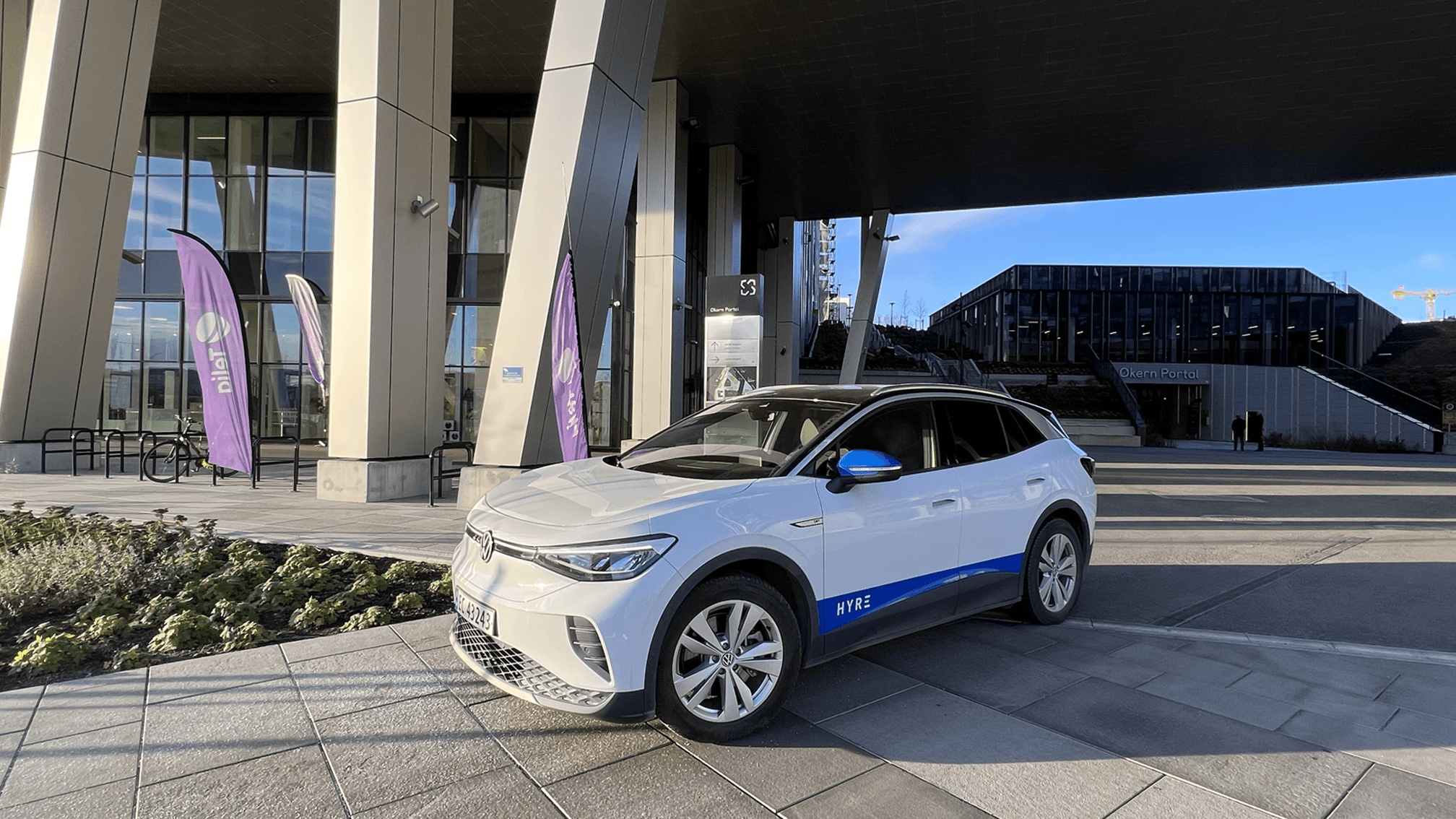
Electric Cars Have Up to Double the Production Emissions
In the fight to achieve cities’ zero-emission goals and meet the commitments of the Paris Agreement, the transport sector is highlighted as an area where it’s crucial to reduce emissions. The transport sector accounts for 32% of total emissions, with road transport making up more than half of that. For land-based personal transport, electrifying the vehicle fleet is an effective means of reducing territorial emissions, as the average Norwegian energy mix results in low CO2-equivalent emissions per kilowatt-hour. However, as demonstrated by organizations like Framtiden i våre hender, it’s also important to consider emissions generated as a consequence of our consumption. This underscores the fact that each new electric vehicle produced has a negative impact on the environment due to high emissions in the production phase.
A research report published in May 2022 estimates the production-based emissions from an electric car with a two-ton body and a 100 kWh battery to be 17.5 tons of CO2 equivalents, while the emissions from producing a fossil-fueled car with a similarly heavy body amount to just over nine tons of CO2 equivalents. Additionally, Volkswagen has published a comparison of the production emissions of a gasoline-powered Golf and an electric ID.3, estimating emissions at 6.8 and 13.7 tons of CO2 equivalents, respectively. Thus, the greenhouse gas emissions from electric vehicle production are twice as high as those for comparable fossil-fueled vehicles. Is there a solution that electrifies the vehicle fleet without replacing all fossil-fueled cars with new electric ones?
One Shared Car Replaces Between Ten and Fifteen Private Cars
Sirin Stav, Oslo’s City Commissioner for Environment and Transport, has also highlighted the need for parking space for all the capital’s cars as a challenge. The fact that cars sit idle 95% of the time means that valuable public space is used for parking that is essentially unnecessary, she says. Stav points to car sharing as part of the solution, as research from TØI shows that one shared car replaces between 10 and 15 private cars, and fewer cars being used more efficiently will reduce the need for parking spaces — in addition to the fact that car-sharing users drive less than those who own their own car.
Most Trips Are to and from Work
Insurance company Fremtind analyzed the usage patterns of 20,000 of its car insurance customers in 2019. The results showed that private individuals use their cars most in the morning and into the afternoon, with car usage in the middle of the day being relatively low.
- Most car trips happen at roughly the same time and are to and from work. At Hyre, we see that those who use car sharing are the ones who use public transport, cycling, or walking to get to and from work, and thus drive significantly less. To succeed with car sharing, we are therefore entirely dependent on continued improvements in public transportation so that more people can manage without their own car on a daily basis, says Nils Petter Nordbø, CEO of Hyre.
- At the same time, we know that cars still have their place, but it largely involves using resources better. In 2021, a private electric car drove only 12,000 km per year, while a shared car drives up to 30,000 km per year. In many cases, we see that the number of kilometers driven is even lower for cars owned by businesses and public entities, Nordbø continues.
Can Halve Vehicle Costs with Shared Cars
A higher utilization rate of a shared car compared to a privately owned car also enables car-sharing providers to offer cost-effective solutions for businesses and consumers. Figures from OFV, leasing companies, and analysis of in-house vehicle fleets show, for example, that a company that chooses car sharing instead of its own service vehicle can save up to 50% of its vehicle-related costs, without the need for a new car to be produced. This comes in addition to the increased availability of shared cars around cities — who really wants to get up extra early and go to the office to pick up the company car, only to pass by their own home on the way to the meeting?
Some of Norway’s largest contributors to the number of cars on the road are private and public businesses and municipalities. Over 20,000 cars are currently owned by businesses and municipalities, and if a portion of this vehicle fleet is replaced with more efficient car sharing, annual costs could be halved — not to mention the contribution to a more sustainable shift.
“We have created a calculator to specifically show that there is a lot to save by transitioning from owning to sharing a vehicle fleet,” says Simen Braaten, product owner at Hyre and responsible for Hyre’s mobility products for businesses.
The calculator is based on figures from OFV and Hyre’s own experience with the ownership, operation, and maintenance of a car and allows the company to adjust for its actual costs, such as leasing costs, parking, and time spent managing the vehicle fleet.
“Since spring 2022, we have talked to many companies that have a large vehicle fleet about our new product, which we have chosen to call Hyre Mobility Plan. A mobility plan has a fixed monthly price and corresponds to the same capacity as one privately owned car, only that you can use any of our now over 1,600 cars in Oslo, Trondheim, Bergen, and Stockholm,” concludes Braaten enthusiastically.
A nobrainer
With Hyre’s mobilitetsplan, businesses and public entities can easily replace their own cars with shared cars, with the same predictability, increased flexibility, and significantly lower costs and administration.

One of the companies that has replaced part of its vehicle fleet with car sharing is Rejlers. Rejlers is a consulting engineering company that is an expert in technical consulting within energy, construction, industry, and infrastructure. After being introduced to Hyre, they reduced their vehicle fleet by two cars and halved their total vehicle costs.
- It’s a no-brainer. We save not only time and money by using Hyre, but it’s also about a sustainability perspective. We now have fewer of our own cars, and we only use a car when needed. For us, the transition to Hyre has been overwhelmingly positive, says Petter Arnesen, CEO of Rejlers.
During the pandemic, Rejlers learned several new ways of working. Before, client meetings and follow-ups were conducted in person, but like most, their everyday life turned to digital meetings during the pandemic.
- Now that we are starting to get back to normal, many still prefer to stick to digital meetings. Nevertheless, the social aspect of these meetings and follow-ups is an important part of the client relationship, and we therefore try to hold as many physical meetings as possible. We are again dependent on a car in our workday, but not in the same way as before, Arnesen explains.
The Right Choice for Both the Wallet and the Environment
If we as individuals and businesses choose car sharing instead of buying or leasing a new car, it will have several positive consequences. The area designated for parking spaces in cities can be reduced, the number of cars on the roads will decrease as a result of fewer kilometers driven, and greenhouse gas emissions related to car production will decline. If we also choose electric car-sharing vehicles, we can collectively reduce our carbon footprint significantly.
Read more about how the Mobility Plan can work for your business, or contact Christer Viksaas Grandal.